The phrase National Stock Exchange (An Unlisted Opportunity) has steadily gained traction among Indian investors, especially those looking beyond traditional listed equities. The National Stock Exchange is already a dominant force in India’s capital markets, operating one of the world’s largest trading platforms by volume. Naturally, curiosity around its unlisted shares has grown.
For many investors, the thesis feels intuitive. If a market infrastructure institution plays such a central role in India’s financial ecosystem, wouldn’t owning a stake before any potential listing be attractive? While the idea is compelling, understanding the nuances is essential before making any investment decision.
Let’s understand the NSE business model first
Incorporated in 1992, the National Stock Exchange of India Ltd. (NSE) was set up to modernize India’s capital markets by providing a transparent, efficient and technology-driven trading platform.
NSE offers trading across equities, equity derivatives, currency derivatives, debt, ETFs and other financial instruments.
It’s a pioneer in Technology. NSE introduced fully automated, screen-based trading and nationwide access, replacing the earlier floor-based trading system
NSE’s Key Strengths
• A play on India’s Capital Market Growth Story
- Rising financialization of savings in India → more investors entering equity & derivative
- Growing retail participation, SIP inflows, and derivative trading volumes directly boost NSE’s revenues
• Monopoly& Leadership in Equity Trading: Domestic market share (FY25) – Equity Cash at 93.6%, Equity Options (Premium Value) at 87.4% and Equity Futures at 99.9%
• High Entry Barriers & Regulatory Moat
- Exchanges require SEBI approval, huge technology infrastructure, and trust
- Very difficult for new players to challenge NSE’s dominance
• Diversified Income Streams
- Beyond equity, NSE earns from debt platforms, MF distribution, index licensing, and clearing corporation
- Growth in new segments like commodities, ETFs, and international collaborations adds stability
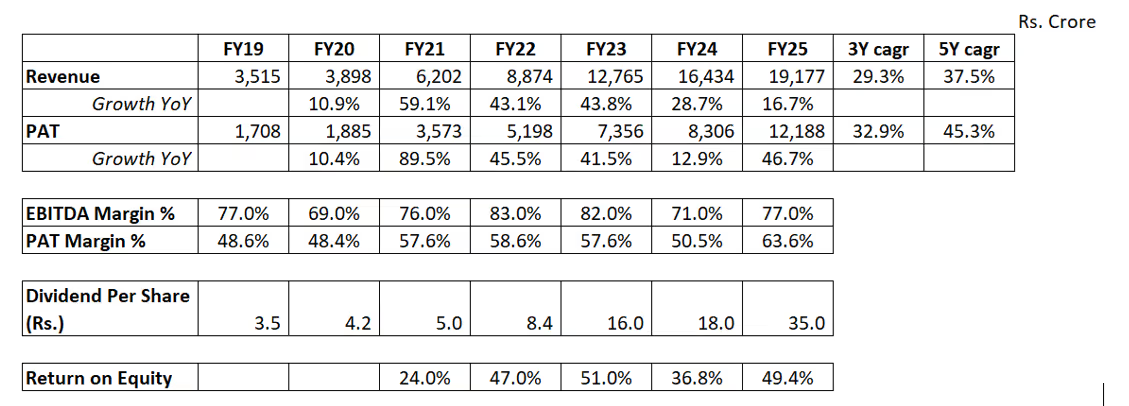
• Strong Financials
- Highly profitable, debt-free, high return on equity (ROE)
- NSE distributes steady dividends due to its cash-rich, low-capex business model
Valuations
The market cap of NSE (as of 19th Feb 2026) is approx. Rs. 5 lac crore (Current Price at Rs. 2,050). It’s trading at 50x TTM PE (vs BSE at 51x TTM PE)
IPO Status
SEBI has granted NOC to NSE on 30th Jan 2026. Listing likely in 8-9 months
Key Risks
• Regulatory & legal risk: Ongoing scrutiny from SEBI and past co-location–related matters mean regulatory actions, penalties or changes in rules can impact operations, reputation and financials
• Concentration risk: A large share of NSE’s revenues is driven by equity derivatives, making earnings sensitive to regulatory changes, margin norms or reduced trading activity in this segment
• Market activity risk: Revenues are closely linked to market volumes and volatility; prolonged low-volatility or weak market phases can dampen trading income
Conclusion
The National Stock Exchange (Unlisted Opportunity) narrative is undeniably intriguing. NSE’s central role in India’s financial markets makes it a natural subject of investor curiosity. Yet, as with any unlisted investment, enthusiasm must be balanced with a clear understanding of risks, liquidity realities, and regulatory considerations.



.avif)