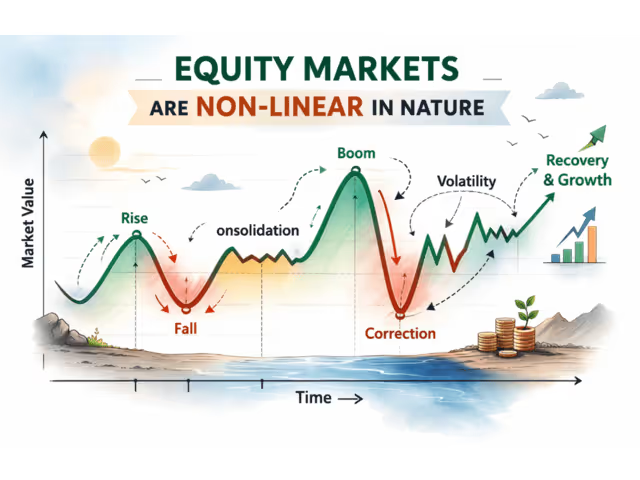


If you have invested in stock markets even for a short period, you would have noticed something interesting. Prices do not move in straight lines. They surge unexpectedly, correct sharply, consolidate for months, and then rally again. This behaviour is attributable to the non-linear dynamics of equity markets, in which price fluctuations represent a fundamental component of market activity.
Market movements are influenced by number of factors such as global events, domestic reforms, interest rates, earnings cycles, liquidity flows, and investor sentiment. These factors rarely move in sync. That is why expecting smooth and predictable returns from equities often leads to disappointment.
Volatility is not a flaw. It is a feature of equity investing.
Let us step back and revisit history - Major Macro Events that shaped Nifty 50 since 2009
Over the years, NIFTY 50 has navigated a series of powerful macro events that shaped its trajectory in a distinctly non-linear manner.
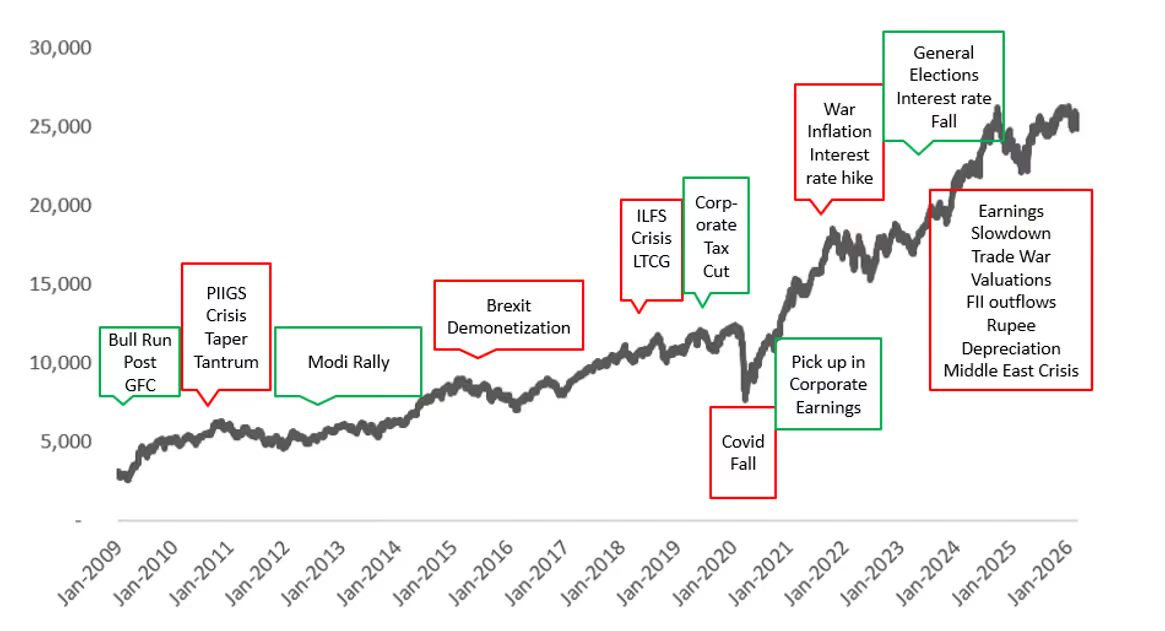
The aftershocks of the Global Financial Crisis and the subsequent PIIGS sovereign debt crisis tested global liquidity, while domestic optimism during the 2014 Modi rally under Narendra Modi fuelled a sharp re rating of equities.
Events such as Brexit, demonetisation in 2016, the IL&FS crisis, and the reintroduction of LTCG tax created intermittent volatility.
The landmark corporate tax cut in 2019 sparked a rally, only to be followed by the steep Covid fall in 2020 and a strong earnings led recovery post pandemic.
Global disruptions including the Russia Ukraine war, aggressive interest rate hikes by central banks, trade tensions, and Middle East conflicts added external pressure, alongside phases of earnings slowdown, high valuations, rupee depreciation, and uncertainty around general elections.
The Emotional Trap: Why Investors Struggle
During uncertain times, many investors fall into common traps:
• Buying aggressively at market peaks
• Selling during panic corrections
• Stopping SIPs during volatility
• Trying to time short term movements
When volatility hits, fear dominates logic. However, Indian markets have demonstrated resilience over the long term, reinforcing that volatility is an inherent feature of equity investing.
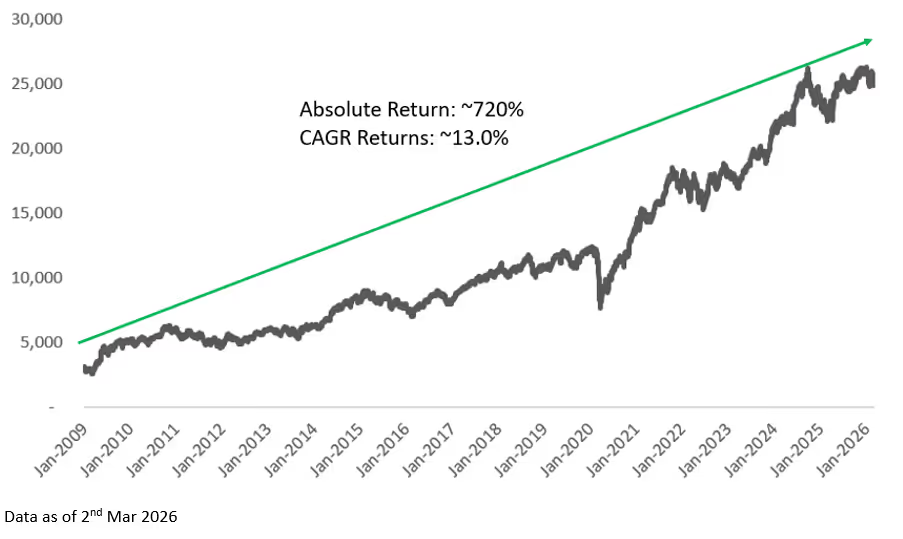
From 2009 to 2026, Nifty 50 delivered a strong performance of approx. 13.0% cagr (8x in 17 years)
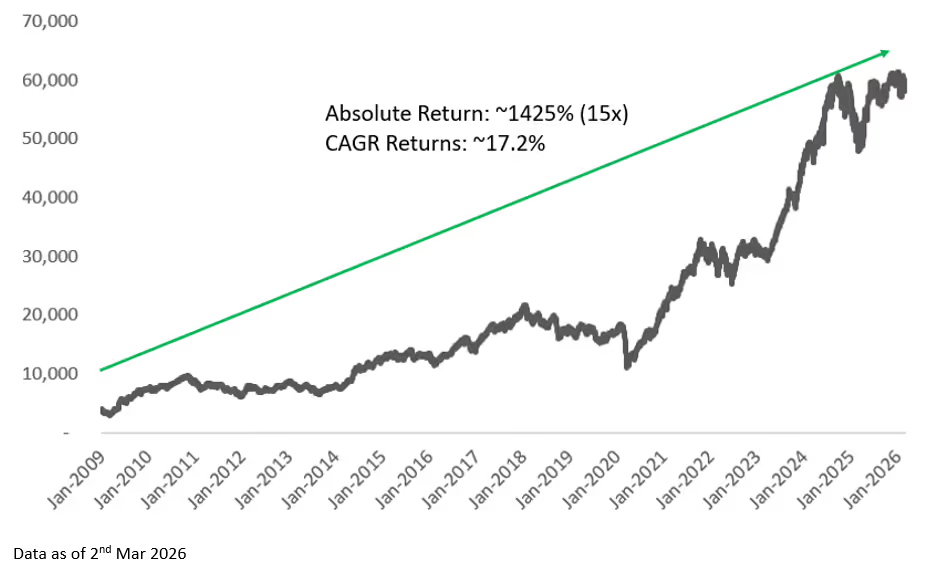
Similarly, Nifty Midcap 100 delivered approx. 17.2% cagr (15x in 17 years)
Recommended strategies for the Investors during uncertain times (such as ongoing Middle East Crisis)
• Avoid Panic Selling: Sharp corrections are usually sentiment driven and tend to recover once uncertainty fades. Selling in fear often locks in losses.
• Deployment strategy for lumpsum investments: Staggered approach over 3-4 months works best for investing lumpsum amount. This helps average out purchase costs during volatile phases and reduce timing risk.
• Stay consistent with your SIPs and avoid discontinuing them during short term market fluctuations.
• Review asset allocation. Ensure your equity, debt, and gold exposure matches your risk profile. Rebalancing during volatility can improve long term returns.
• Focus on quality businesses. Companies with strong cash flows, low debt, and consistent earnings tend to recover faster than speculative stocks.
• Maintain liquidity. Keep an emergency fund of at least six months’ expenses to avoid forced selling during downturns.
Key Takeaways
We must constantly remind ourselves that equity markets can be highly rewarding over time, but they inherently come with non linear movements and periods of volatility. This is not a warning sign but a reminder of how wealth creation truly works.
Indian markets will continue to witness corrections, rallies, and consolidation phases. The key is not to eliminate volatility but to manage it through asset allocation, discipline, and a medium to long-term view. When investors align expectations with reality, they turn market fluctuations into opportunities rather than threats.
At Avisa Wealth, we believe in guiding investors through uncertain times with research backed strategies and prudent asset allocation. If you would like to review your portfolio in light of the current global developments, you may contact us to help you stay invested with confidence and clarity.



.avif)