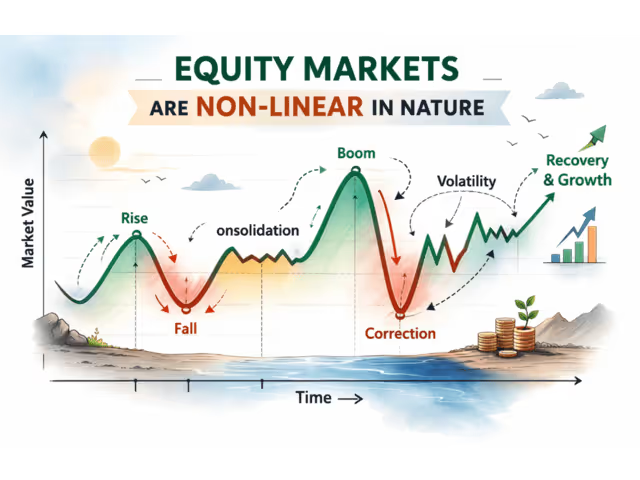


The recent escalation in the Middle East has sent shockwaves through global financial hubs, and Dalal Street is no exception. As of March 9, 2026, the Indian equity markets are grappling with significant volatility, driven by a "risk-off" sentiment and concerns over energy security.
• Energy Squeeze: Crude oil prices have surged toward $110 per barrel as the Strait of Hormuz—a vital chokepoint for 20% of global oil—faces potential disruptions.
• Sectoral Impact: While upstream oil companies and defense stocks show resilience, fuel-dependent sectors like aviation, paints, and logistics are facing margin pressure.
• FII Outlook: Foreign Portfolio Investors (FPIs) are adopting a "wait-and-watch" approach, leading to temporary outflows and pressure on the Indian Rupee.
Understanding the 2026 Geopolitical Shift
The geopolitical landscape shifted dramatically in late February 2026. Following high-intensity military strikes in the Gulf region, the immediate concern for India transitioned from trade optimism to supply chain resilience.
The disruption of the Strait of Hormuz is the primary "risk transmitter." For a country that imports nearly 85% of its crude oil and over 50% of its LNG, any friction in this maritime corridor is more than just a headline—it is a direct hit to the fiscal deficit.
Crude Oil: The Silent Market Mover
In the Indian context, equity markets and crude oil prices share an inverse relationship. When Brent crude spikes, it inflates the import bill, widens the Current Account Deficit (CAD), and stokes domestic inflation.
Strategic analysts note that for every $1 increase in crude prices, India’s annual import bill rises by approximately $2 billion. With prices rallying by over 50% over the last 2 weeks, the market is pricing in higher input costs for India Inc. This "imported inflation" limits the Reserve Bank of India’s (RBI) room to maneuver on interest rates, further dampening investor enthusiasm for rate-sensitive sectors like Real Estate and Banking.
Sector-Wise Impact: Winners and Losers
Geopolitical crises often trigger a sharp sector rotation. While the broader indices may look red, specific pockets of the market react differently based on their exposure to energy and global trade.
The Under-Pressure Categories
• Aviation & Logistics: Higher Aviation Turbine Fuel (ATF) prices and the closure of airspaces over the UAE and Saudi Arabia have led to flight cancellations. Companies like InterGlobe Aviation (IndiGo) are feeling the heat of rising costs and rerouted journeys.
• Paints & Chemicals: These industries use crude derivatives as raw materials. A sustained spike in oil usually leads to margin compression, as passing on costs to consumers in a volatile environment is challenging.
• Automobiles: Rising fuel prices often deter discretionary spending on vehicles, impacting the demand for both passenger cars and two-wheelers.
The Defensive Plays
• Upstream Oil Producers: Companies like ONGC and Oil India often benefit from higher realization prices per barrel of oil produced.
• Defense & Aerospace: Heightened global tensions often lead to a re-evaluation of defense outlays. With India’s focus on "Atmanirbhar Bharat," domestic defense manufacturers are increasingly viewed as long-term structural bets.
• IT & Exports: While global sentiment is weak, a depreciating Rupee can provide a slight cushion to IT exporters, making their services more competitive in dollar terms.
Strategies for the Investors
• Avoid Panic Selling: Sharp corrections are usually sentiment driven and tend to recover once uncertainty fades. Selling in fear often locks in losses.
• Deployment strategy for lumpsum investments: Staggered approach over 3-4 months works best for investing lumpsum amount. This helps average out purchase costs during volatile phases and reduce timing risk.
• Stay consistent with your SIPs and avoid discontinuing them during short term market fluctuations.
• Review asset allocation. Ensure your equity, debt, and gold exposure matches your risk profile. Rebalancing during volatility can improve long term returns.
• Focus on quality businesses. Companies with strong cash flows, low debt, and consistent earnings tend to recover faster than speculative stocks.
• Maintain liquidity. Keep an emergency fund of at least six months’ expenses to avoid forced selling during downturns.
Conclusion: A Test of Market Resilience
The current Middle East crisis has undoubtedly increased global uncertainty. For Indian equity markets, the immediate impact may be visible through volatility, sector rotation, and cautious foreign flows. However, India’s structural growth story remains intact.
Geopolitical events tend to test investor patience more than fundamentals. For disciplined investors with a long-term horizon, such phases often present opportunities rather than threats.
At Avisa Wealth, we believe in guiding investors through uncertain times with research backed strategies and prudent asset allocation. If you would like to review your portfolio in light of the current global developments, you may contact us to help you stay invested with confidence and clarity.



.avif)